Sunday, July 18, 2010

The Sabbath

The Gospels report that Jesus conflicted with the Jewish leaders several times over Sabbath issues. Jesus rejected the restrictive traditions of the elders. He allowed his disciples to pluck grain, he healed, he taught, and he told a man to carry his sleeping mat (Matthew 12:1-12; Luke 14:1-6; John 5:1-18).  Jesus noted that priests worked on the Sabbath, that animals could be rescued or taken to water, and circumcisions could be performed (Matthew 12:5-6, 11; Luke 13:15; John 7:22). Jesus claimed to have authority over the Sabbath, to set people free on the Sabbath, and to work on the Sabbath (Matthew 12:12; Luke 13:16; John 5:17).


But Jesus did not break the Sabbath, since he was born under the law and lived under the old covenant requirements (Galatians 4:4; Hebrews 4:15). His activities broke Pharisaic rules, but not the law of God. Early Christian writers did not claim that Jesus broke the Sabbath.

The first disciples of Jesus were pious Jews in a Jewish culture. They apparently kept the Sabbath according to contemporary Jewish customs. Luke tells us that some female disciples rested on the Sabbath in obedience to the commandment (Luke 23:56), and that the apostles taught in the temple courts (Acts 3:1; 5:12, 25). Paul customarily preached in synagogues on the Sabbaths (Acts 13:14; 16:13; 17:2; 18:1-11).

We are also told that the disciples met daily (Acts 2:46), and that Paul preached daily (Acts 19:9). There is no record that Paul taught his converts to keep the Sabbath. Actually, he taught that special days were something about which Christians should not be judged (Colossians 2:16), and he asked the Roman Christians to tolerate differences in worship practices having to do with foods and days (Romans 14:5).

The New Testament gives us examples of Christians meeting on the first day of the week. The risen Jesus appeared to the disciples on two Sundays (John 20:19, 26), but there is no mention that he gave any command for a weekly commemoration of the resurrection. Paul’s traveling party once stayed seven days at Troas, and met on the first day of the week (Acts 20:7), but this was an unusual farewell meeting, not necessarily indicative of normal practice. Paul told the Corinthians to set aside an offering on the first day of each week (1 Corinthians 16:2), but this may also have been an exceptional practice rather than a normative one. John had a vision on “the Lord’s day” (Rev 1:10), but some debate whether this is a reference to Sunday. Moreover, the verse does not say that this was a day on which Christians should meet.   None of the texts can be used to prove that Christians regularly met on any particular day of the week.
But there is good reason to believe that some Jewish Christians, especially in Palestine, continued to observe the Sabbath.

Saturday, July 17, 2010

Contemplation

The secret of Christian contemplation
is that it faces us with Jesus Christ
toward our suffering world
in loving service and just action

Catherine of Siena

________________________________________

Thursday, July 15, 2010

I live, yet do not Live in Me - John of the Cross


The following poem expresses the intensity with which John of the Cross longs to be united with his Love, Father God.  The language is very emotive and calculated to move the reader to understand something of the passion with which John feels about this.   The author of The Dark Night of the Soul conveys something of the searing and tearing existence which separation from union causes him.  He can find no peace, he can know no rest; he is dying because he does not die.


I live yet do not live in me,

am waiting as my life goes by,

and die because I do not die.

No longer do I live in me,

and without God I cannot live;

to him or me I cannot give

my self, so what can living be?

A thousand deaths my agony

waiting as my life goes by,

dying because I do not die.


This life I live alone I view

as robbery of life, and so

it is a constant death -- with no

way out until I live with you.

God, hear me, what I say is true:

I do not want this life of mine,

and die because I do not die.

Being so removed from you I say

what kind of life can I have here

but death so ugly and severe

and worse than any form of pain?

I pity me -- and yet my fate

is that I must keep up this lie,

and die because I do not die.


The fish taken out of the sea

is not without a consolation:

his dying is of brief duration

and ultimately brings relief.

Yet what convulsive death can be

as bad as my pathetic life?

The more I live the more I die.

When I begin to feel relief

on seeing you in the sacrament,

I sink in deeper discontent,

deprived of your sweet company.

Now everything compels my grief:

I want -- yet can't -- see you nearby,

and die because I do not die.


Although I find my pleasure, Sir,

in hope of someday seeing you,

I see that I can lose you too,

which makes my pain doubly severe,

and so I live in darkest fear,

and hope, wait as life goes by,

dying because I do not die.

Deliver me from death, my God,

and give me life; now you have wound

a rope about me; harshly bound

I ask you to release the cord.

See how I die to see you, Lord,

and I am shattered where I lie,

dying because I do not die.

My death will trigger tears in me,

and I shall mourn my life: a day

annihilated by the way

I fail and sin relentlessly.

O Father God, when will it be

that I can say without a lie:

I live because I do not die?

Wednesday, July 14, 2010

Always begin with a prayer

We must begin with a prayer before everything we do, but especially when we are about to talk of God. We will not pull down to ourselves that power which is both everywhere and yet nowhere, but by divine reminders and invocations, we may commend ourselves to it and be joined to it.


(The Divine Names, Pseudo-Dioynsius, late 5/early 600 CE) cf. Acts17:34)

Tuesday, July 13, 2010

Sudden Death, Sudden Mercy


Anyone who has heard of the terrible tragedy on the roads of Donegal last Sunday evening will feel their heart go out the parents, families and friends of the 7 young men and one man senior in years who died.  One other young person, the driver of one of the vehicles, is in a serious condition in hospital.   It is a 'head-shaking heart aching' tragedy of enormous proportions. The wider communities in which these men lived have been devastated by what has happened.  Inter-twined and close knit, many many people know the families if not the lads themselves.

When something like this happens, it is natural that we ask questions?  How and why could this terrible thing happen?  Why does God allow tragedies such as these happen?  Couldn't God have prevented this needless suffering of such magnitude?     There are no easy answers.  In fact there are no answers that can satisfy our natural sense of shock and questioning adequately.   We are left saddened and bereft of meaning and purpose.

We live in a Universe that is free to unfold and take its course.  We believe it is free just as we believe reality and human existence takes place within a context that everything is radically free from pre-determination or manipulation.   Could it be that the price we pay for existing in this radically free universe is that the possibility of tragedy, personal and corporate suffering must be included in the nature of reality?

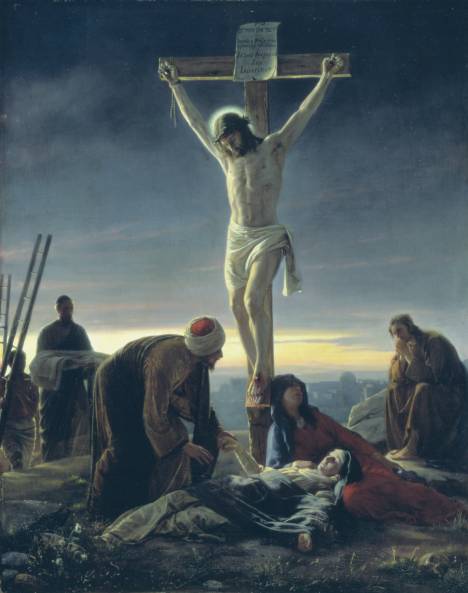
We do know that God understands suffering from the inside.  The Son God sent to redeem and save us was cruelly rejected, tried and crucified. We believe that our own suffering somehow is linked to the suffering of Christ which in turn touches the suffering of the whole world.  The cross is the only emblem needed to show how God experienced suffering and that we have a suffering God who suffers alongside the broken and bereaved.

But full, convincing and satisfactory answers as to why things like these happen remain unavailable to us.  It belongs in the realm of mystery and that which we will only fully grasp at a later point in our journey.   In the meantime, it may help to remember the old saying - 'sudden death, sudden mercy' to reassure us that, whatever else remains unexplained, the mercy of God must surely be granted instantaneously in circumstances such as these.  May they have Eternal Rest.

Monday, July 12, 2010

Scripture

All scripture is inspired by God and can be profitably used for teaching, for refuting error, for guiding people’s lives,
and teaching them to be holy.

2 Timothy 3:14–16